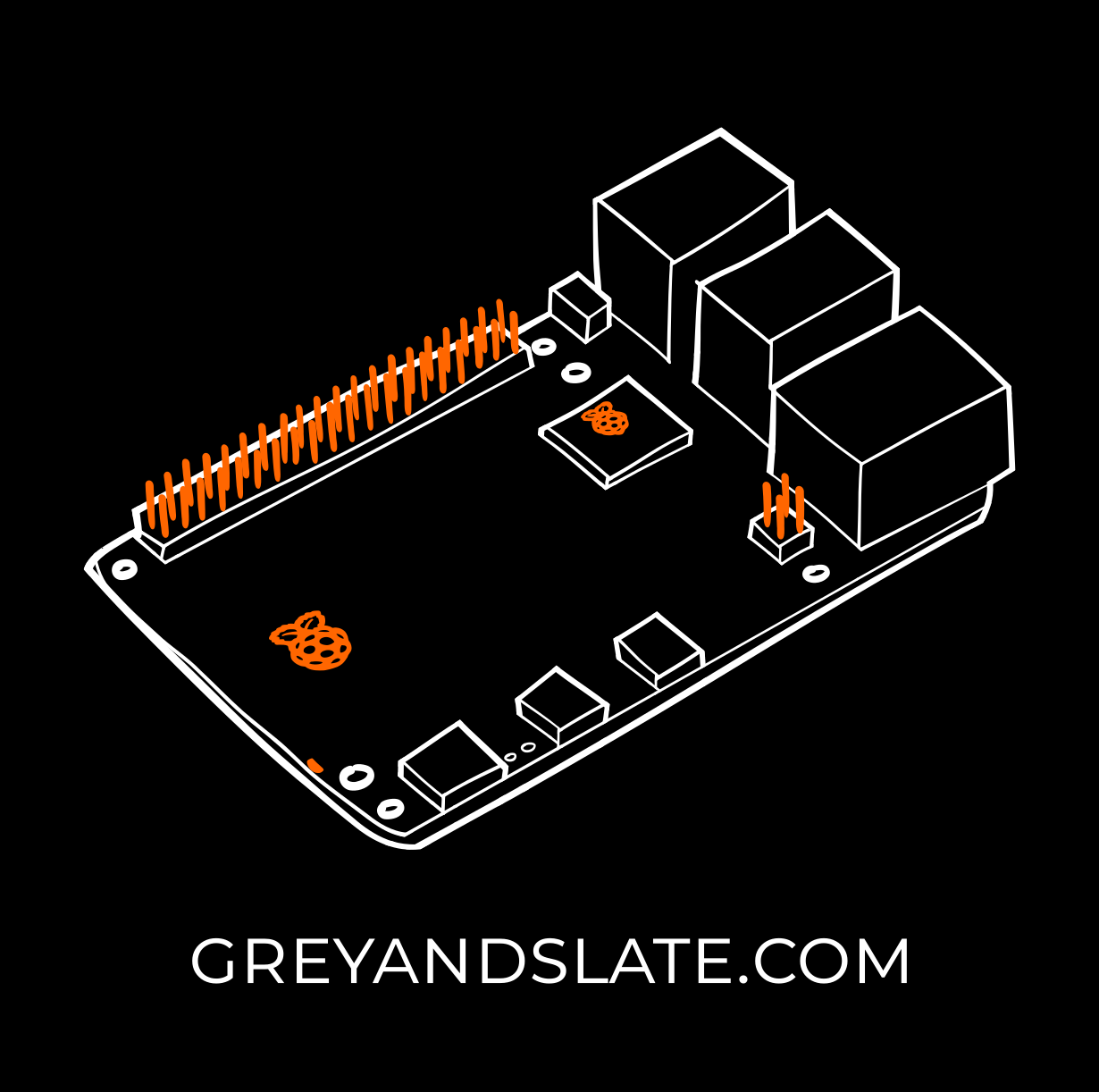
I’ve been struggling to define my process for creating hand-drawn designs. I feel it is more than just ‘tracing,’ in the boring, mindless sense.

As I have shared before, I do my hand-drawn designs on an iPad Pro, with an Apple Pencil, in Adobe Fresco. I look for visually interesting images from all sorts of sources and then use my tools to turn them into my designs.
I could use software to convert things to look line-drawn. But part of inspiration to do it this way was a suggestion to make the designs MINE. And by doing it in my hand, there is an unmistakable style that is ME.
Tracing or something more? A long tradition.
I realized how I do my drawings is in a long line of tradition, all the way back hundreds of years.
In the 16th and 17th centuries, various tools were created that could aid a draftsman or artist to better capture an image.
One was the pantograph, a mechanical linkage contraption used to reproduce something that is traced, also to enlarge or shrink the image. My mother used to have one for her drafting work.
Another was the camera obscura, which is basically a camera and the desired image projected on the backplane upside down. The artist could then use that to guide their work.
A third one was the camera lucida, which is a partly-mirrored apparatus where you see the image you want overlaid on the surface you then reproduce the trace on. You can find some phone apps that do this in your favorite app store.
These were all traditional tools from the Enlightenment for copying objects.
More modern tools
I was really into animation in college. Animators typically use an onion-skin method to be able to see before and after frames and draw the ‘in-between’ frame. Pros use transparent cels and make images over that, painting on the cel, but seeing the others at the same time. What we used in school was plain paper, but with a lightbox to in-between (that’s what the process is called) and draw the next frame.
The ‘onion-skin’ reference is that sometimes the paper is very thin and you layer them, to see the drawing better with or without the lightbox.
Fast forward to a few more years (I am old) and Photoshop popularized layers in image creation. When you add that to a digital drawing surface (say, an iPad and Fresco) you can draw over layers while still seeing another layer, often dimmed (quite true to onion-skinning actually).
I use this onion-skinning to make my stylized drawings. I put the image to be stylized on one layer, and draw on top of it.
Putting it in context
The historical arc from pantograph → camera obscura → camera lucida → animation cels, lightbox → digital layers puts me in a long tradition of artists using optical and mechanical aids. Contextualizing the practice historically reveals to me that artists have always used tools to mediate between observation and mark-making.
Part of my exploration here is that what I do can be called ‘tracing,’ but that doesn’t really do justice to what I do.
I’m not claiming to be Vermeer, but I have some basis of skill and eye, I’m making deliberate decisions, and have been developing a recognizable style. My drawings are ME.
As you can see from the ‘build’ video below, which is a time lapse I get from Fresco, you can see that while the tool aids with placement and proportion, the line quality, design choices, what gets included or excluded, the blaze orange callouts – all mine.
Art tools controversy?
David Hockney, the British painter, noticed portraits from around 1420 onwards suddenly became dramatically more accurate: realistic hands, complex foreshortening, fabric folds that looked almost photographic. The jump in skill seemed too sudden and widespread to be explained by practice alone.
His thesis, developed with physicist Charles Falco, was that artists like van Eyck, Caravaggio, Vermeer and others were using optical devices, such as concave mirrors and later lenses, to project images onto their canvases and trace or paint over them. The projected image would be dim and fleeting, so it still required enormous skill to capture, but it could explain the sudden accuracy jump.
The art establishment largely hated this idea. Seemed like Hockney and Falco were ‘cheating’ the masters out of their genius. But Hockney’s counter-argument was essentially: so what? The paintings are still magnificent. The optical tool didn’t make the painting, it was one instrument in the artist’s toolkit.
I suppose the question really is not if this thesis is true or not. The question “did these masters use a tool to aid accuracy?” is completely separate from “is the work skilled and original?”
Last comment
In researching for this post, I was reminded that many famous artists have used photos to help them with their artwork. Indeed, my daughter often illustrates from a photo.
Using photos seems completely normalized. Nobody questions whether a painter who works from photos is “cheating.” I feel stigma seems to attach most strongly to mechanical tracing specifically, not the general use of a reference.
Summary
Every generation has a new art tool that causes controversy, then gets absorbed as normal practice. Photographs, projectors, lightboxes, now digital layers. The anxiety is always the same and it always resolves.
More importantly, the use of these tools do not detract from the skill and wonder of these works. There’s way more to illustrating than copying an image.
When I give you my illustrations, they are me, no matter my reference.
I hope you enjoy them.

Leave a Reply